Coming soon!
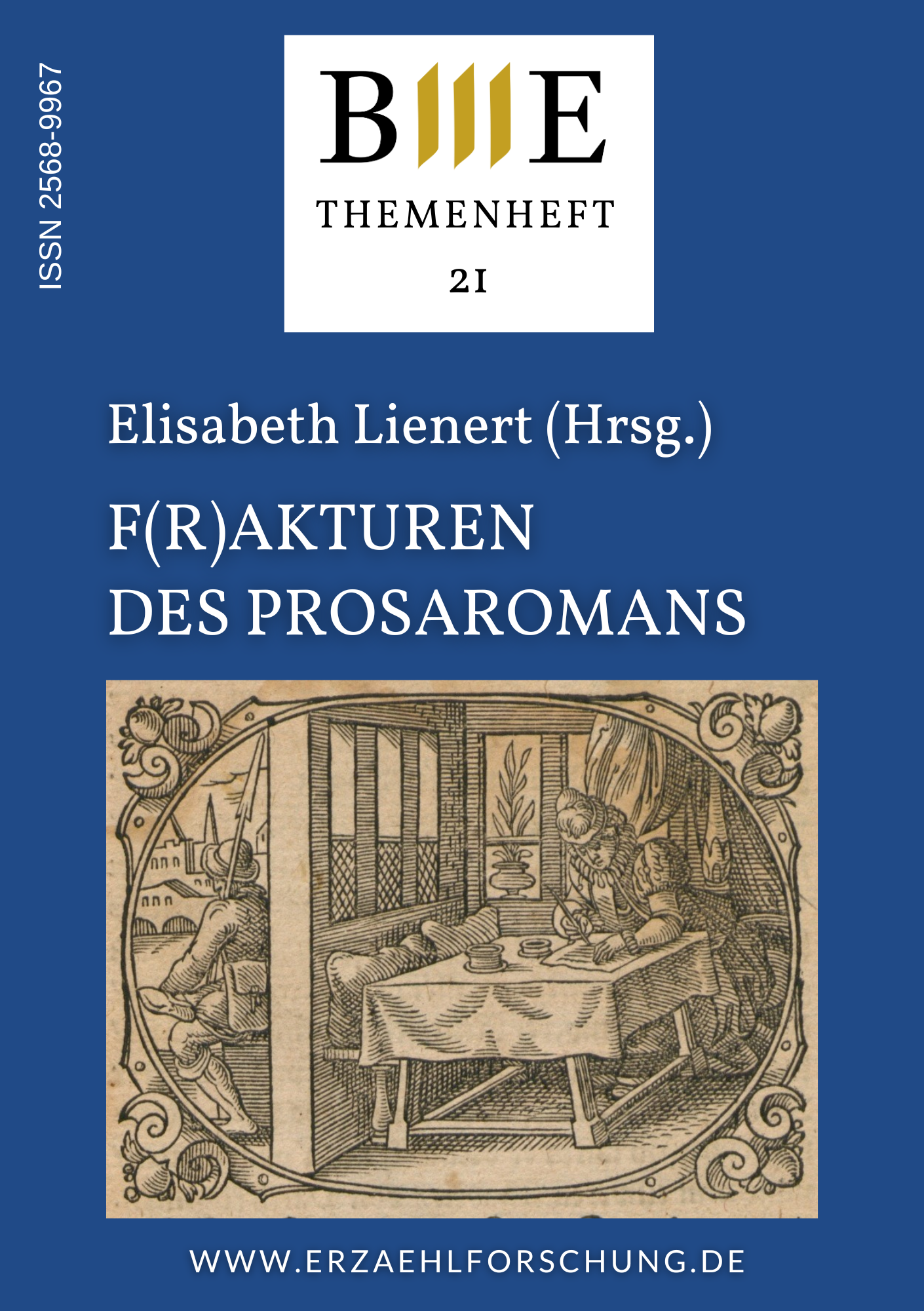
Special issues of the past years you will find here

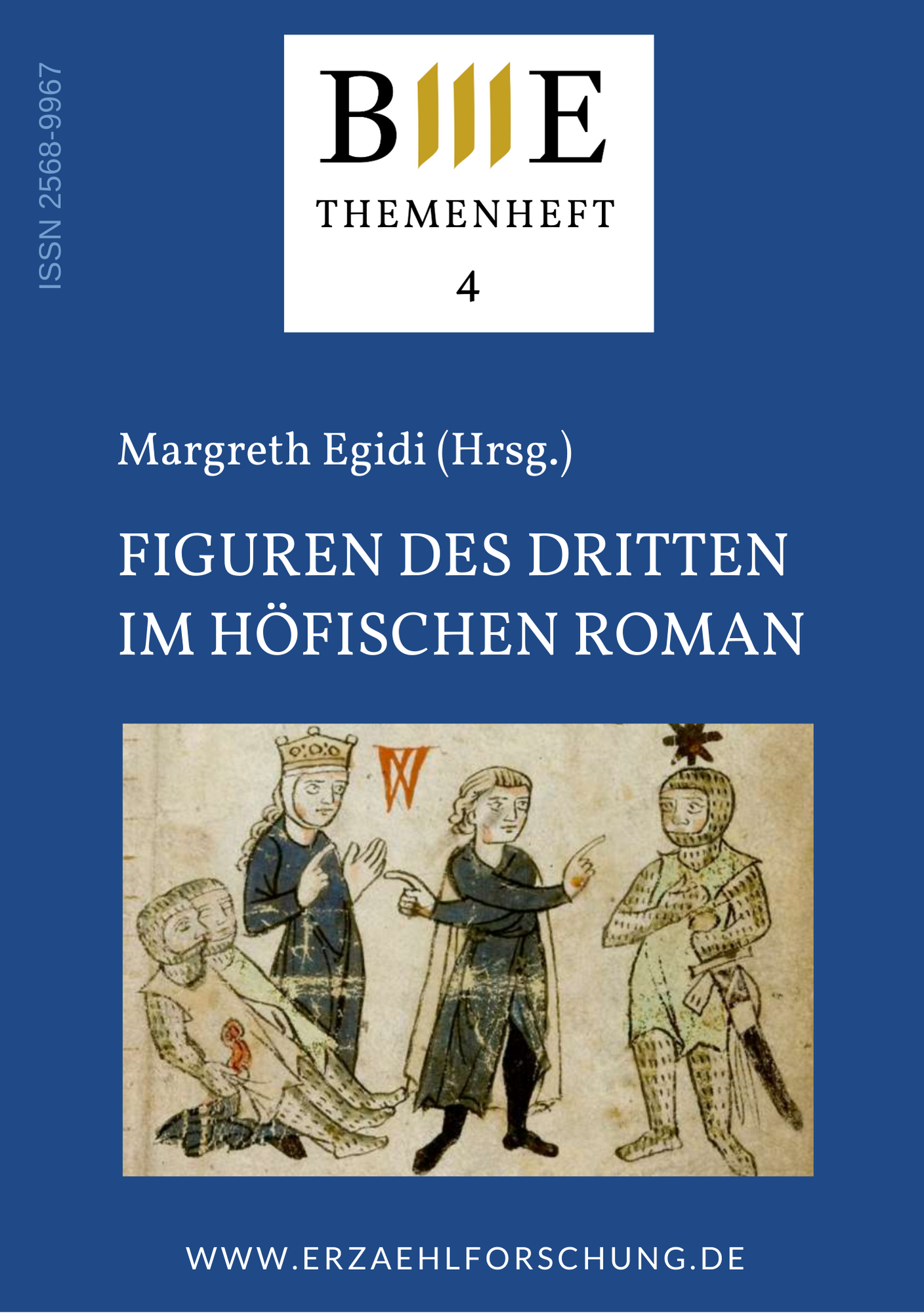
Triadic logics not only unfold on the most diverse levels and fields of observation, but also differ in their explicitness, consistency and dynamics, in the dimensions, effects and temporality of their inherent irritation and ambivalence. The fixation of such an interest on the goal of ›overcoming‹ binary thinking is therefore preferable to an analytical openness. This also historically avoids the fixation of a ›boiling point‹ at which we can only speak of ›actual‹ thirdness. This thematic issue deals with personal figures of the third in pre-modern texts and their narrative productivity: with triangular, serially unfolded jealousy constellations in the ›Trojan War‹, with a rival figure in ›Reinfried von Braunschweig‹, whose axiological ambivalence also encompasses the narrative voice, and finally with the narrator as a figure of the third in ›Parzival‹, who breaks up the dual structure of the duel with different textual-aesthetic strategies.
Researchers agree that one quality of pre-modern minor epic poetry is certainly its conciseness. What exactly is meant by this quality, however, often remains vague. Understandings of conciseness range from conspicuousness, formative potential and brevity to complexity of content, pointedness or a dimension of meaning that has yet to unfold. In this anthology, these different approaches are not artificially levelled out. Instead, different understandings of the phenomenon of ›concise narrative‹ are developed and utilised as examples for an interpretation of short fiction. The aim is to explore the interpretative potential of the concept of conciseness and to create new methodological approaches to pre-modern short fiction in particular.
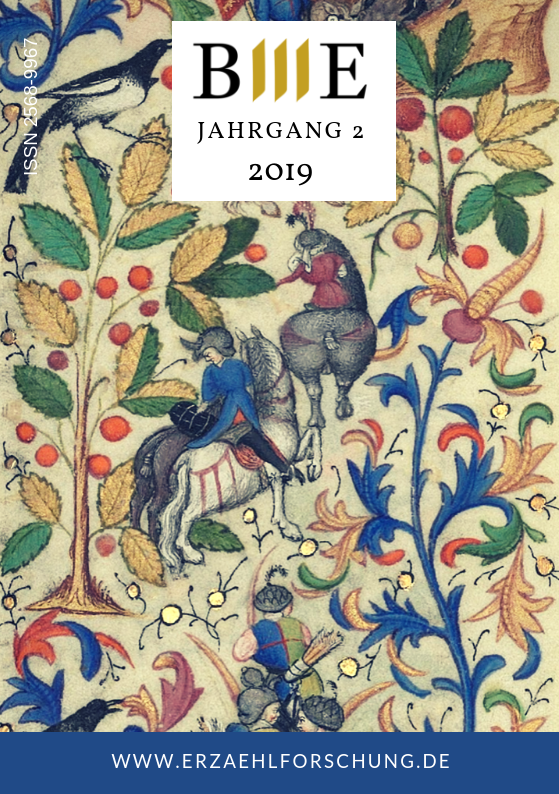
The current annual volume is continually supplemented with new articles as soon as they have gone through the peer review procedure and editing process. We inform registered readers about the publication of new contributions by email. At the end of the year, the complete annual volume is available for download as a single PDF file. Special issues are published throughout the year as independent publications.
Cover picture: Paris, BnF, Latin 1156B, fol. 171r, Rennes, 1430 (source: gallica.bnf.fr / BnF)
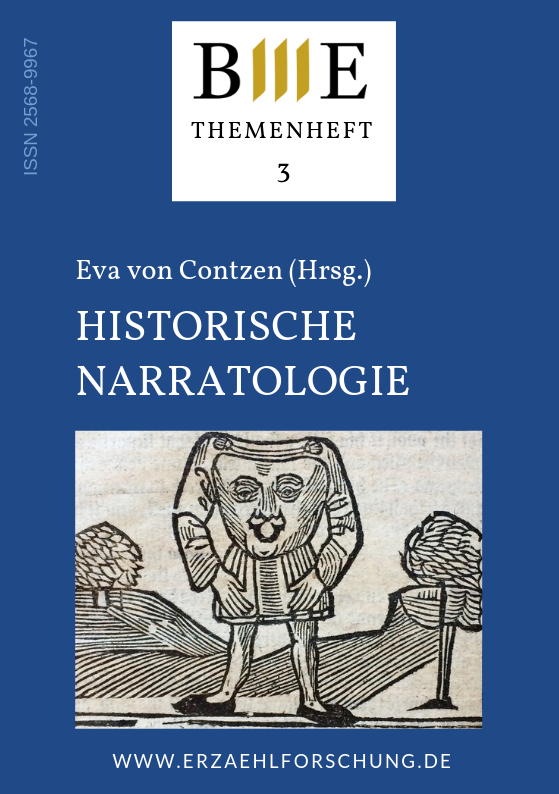
This special issue documents the final conference of the network ›Medieval Narratology: Forms and Functions of Medieval Narratives‹, which was funded by the German Research Foundation from 2014 to 2017. The contributions focus on the ›big‹ topics: What role does unreliability play in medieval narrative, to what extent is narrative ›probable‹ or characterised by parameters of the (im)probable? To what extent can narrative in schemata be understood as a productive process? The medievalist debates continued here will also be commented on by the comparatist Karin Kukkonen and the media scholar Stephan Packard from a critical and distanced perspective.
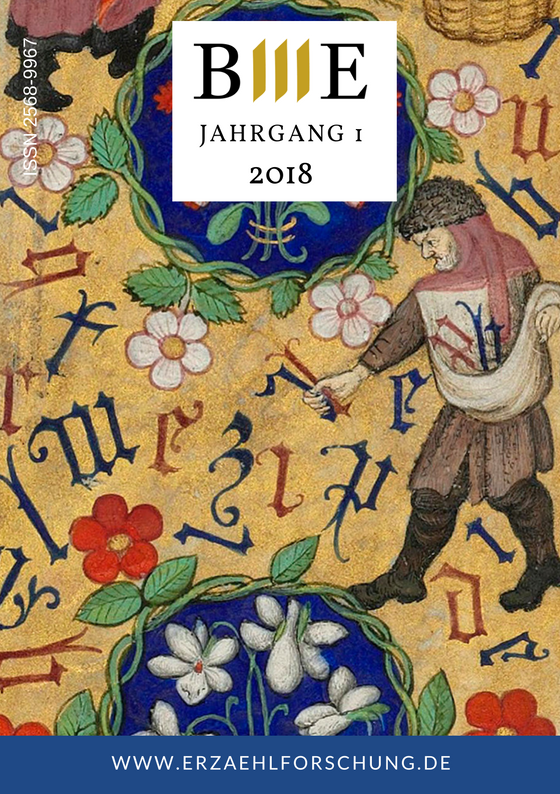
The current annual volume is continually supplemented with new articles as soon as they have gone through the peer review procedure and editing process. We inform registered readers about the publication of new contributions by email. At the end of the year, the complete annual volume is available for download as a single PDF file. Special issues are published throughout the year as independent publications.
Cover picture: Harvest of letters, Paris, BnF, Latin 1156B, fol. 135r, Rennes, 1430 (source: gallica.bnf.fr / BnF)
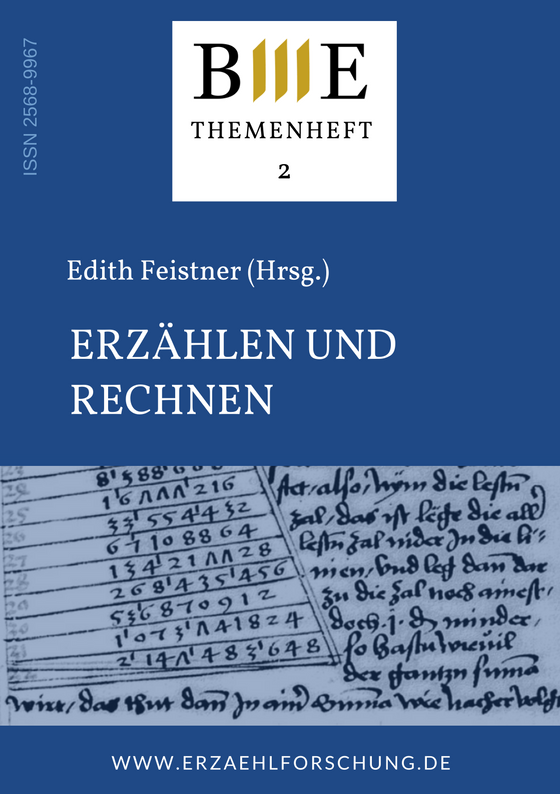
The contributions in the special issue are intended as an attempt to explore a context that has thus far received remarkably little attention. Using examples from the 13th to the 17th century, from texts for school use to poetry, and based on both mathematics and literary narrative itself, these studies shed light on relationships between narration and arithmetic, leading to the question of whether the connection between narrative as ‘recounting’ and arithmetic could possibly be regarded as a paradigm of historical narratology. Initial impressions are thus given of the variety of points of departure that a discussion could and should have in this context, as well as impulses for furthering such debate.
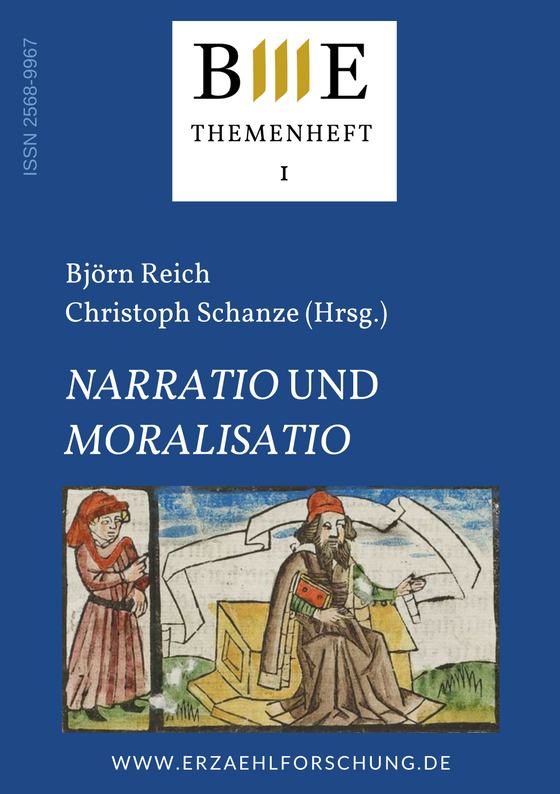
What does it mean when, in the case of exempla, fables, comical tales and fairy tales the moralisatio is at odds with what is narrated, when the evaluation contradicts or subversively undermines the narrated example, if a banal moral is added to a multi-layered story or if the moral is simply not transparent – in other words, when narrative and didactics do not interact but insist on their own meaning and each have their own claim to validity? The contributions in this special issue seek out these and similar contradictions between narrative with didactic aspirations and the moral conveyed in order to show how tensions and discrepancies between narrated story and lêre (teaching) result in a fruitful structural openness and multiple perspectives.
›Beiträge zur mediävistischen Erzählforschung‹ (BmE) are published online by the University of Oldenburg Press under the Creative Commons License CC BY-NC-ND 4.0. The contributions published here may therefore be disseminated and published for non-commercial purposes, without modification, stating the author and place of publication.
Editors: Prof. Dr. Anja Becker (Bremen) and Prof. Dr. Albrecht Hausmann (Oldenburg)
Contact: herausgeber@erzaehlforschung.de - Internet: www.erzaehlforschung.de
ISSN 2568-9967