Coming soon!
Special issues of the past years you will find here

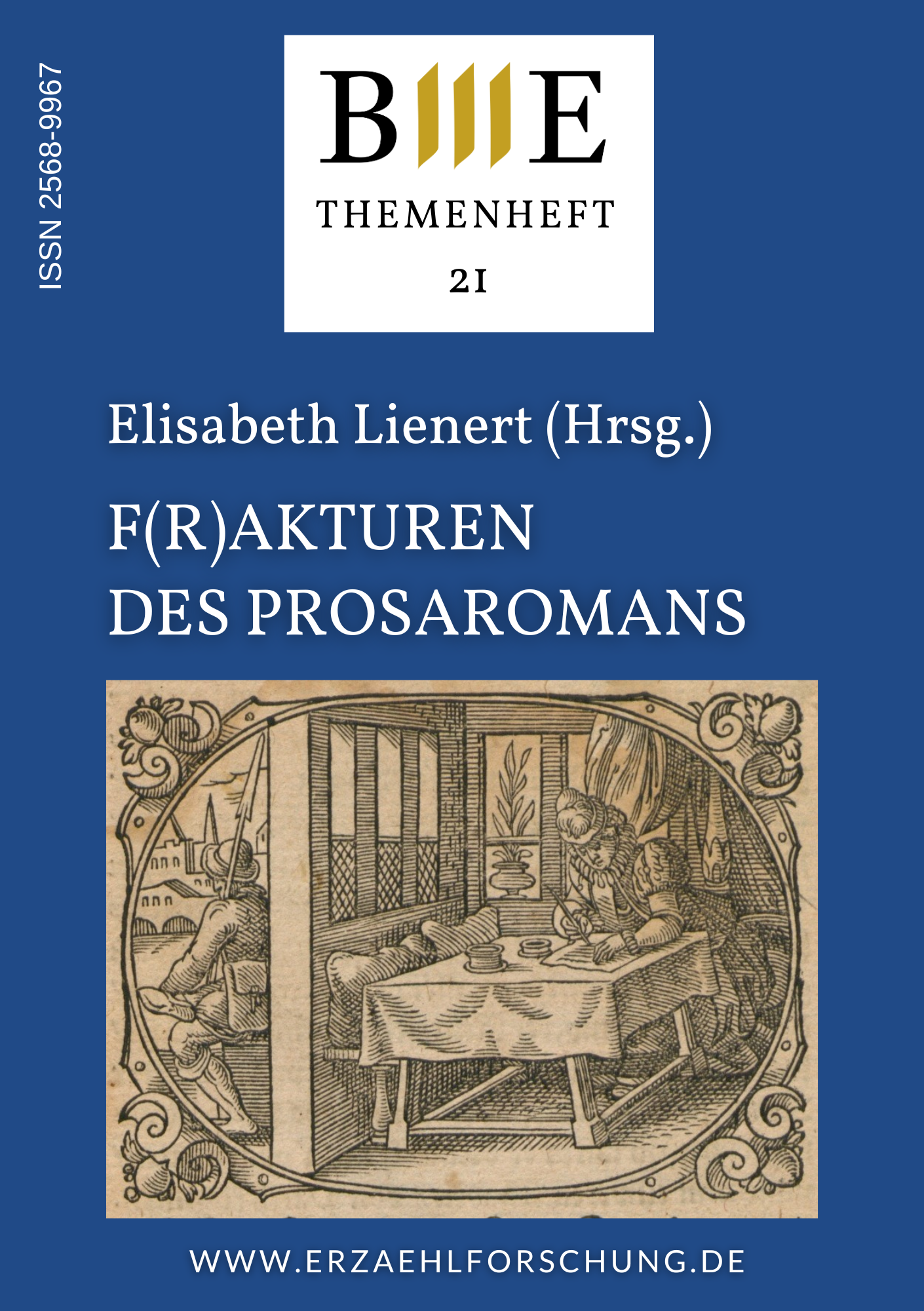
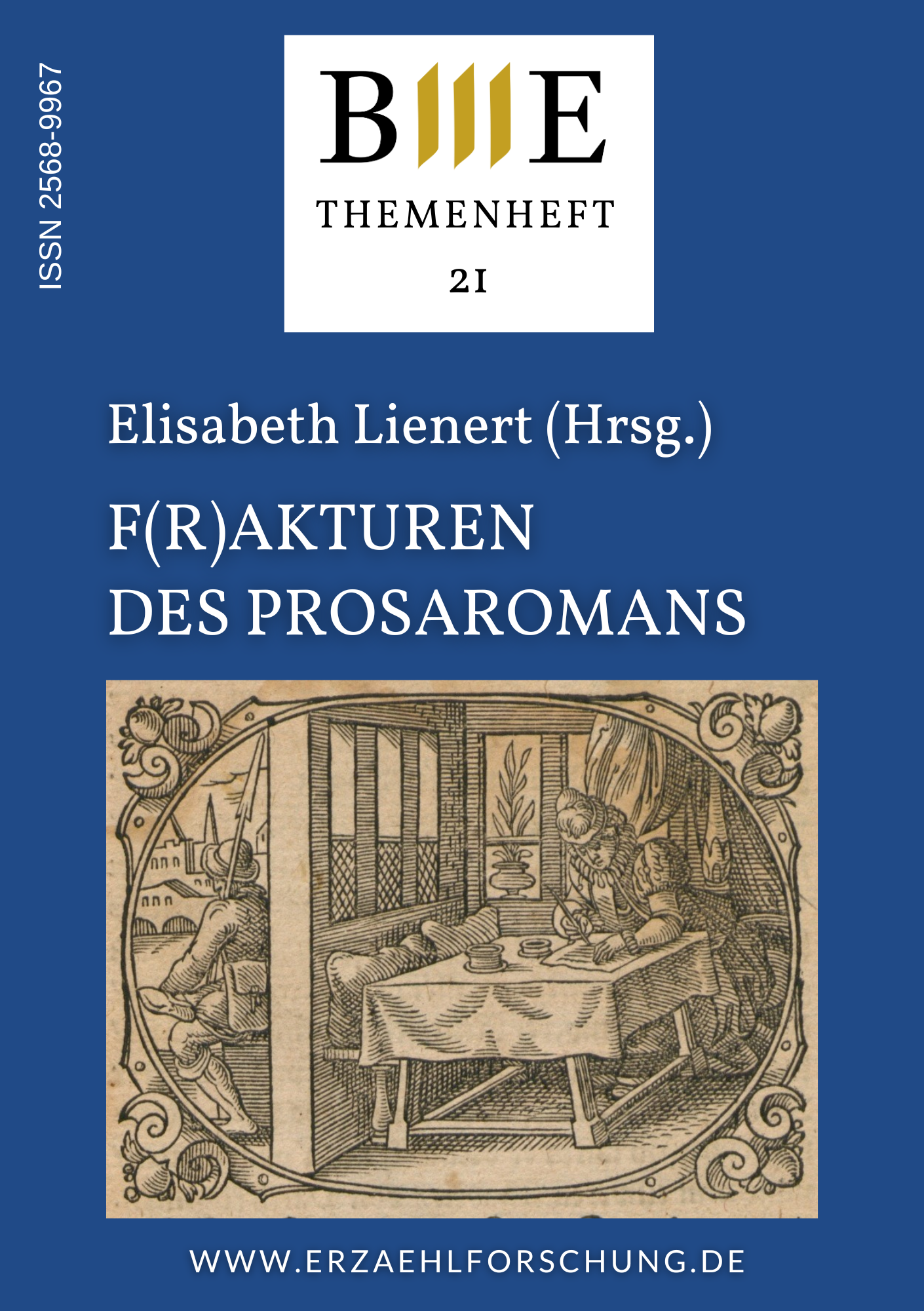
Die Beiträge des Themenhefts untersuchen narrative Strategien und Brüche in Prosaromanen der Frühen Neuzeit am Beispiel des im ‚Buch der Liebe‘ (1587) zusammengestellten Corpus. Fokussiert wird auf heterogene Texturen und Perspektivierungen jenseits der vordergründigen Schemagebundenheit und Deutungssicherheit der Texte. Die Beiträge erscheinen sukzessive; nach Vorliegen aller Beiträge wird an dieser Stelle zusätzlich das ganze Heft in einer einzigen PDF-Datei zum Herunterladen zur Verfügung stehen.
Titelbild: Schreibszene aus: Das Buch der Liebe / Inhaltendt Herrliche Schön Historien Allerleÿ Selten vnd newen Exempel / darausz menniglich zu vernemmen / beyde was recht ehrliche / dargegen auch was vnordentliche Bulerische Lieb sey […] auffs new zugericht / vnd in Truck geben / dergleichen vor nie gesehen, [Frankfurt a. M.: Sigmund Feyerabend] 1587 (VD16 B 8959), Exemplar Basel, Universitätsbibliothek, UBH Wack 688, online, fol. 12rb u. ö. (Ausschnitt).
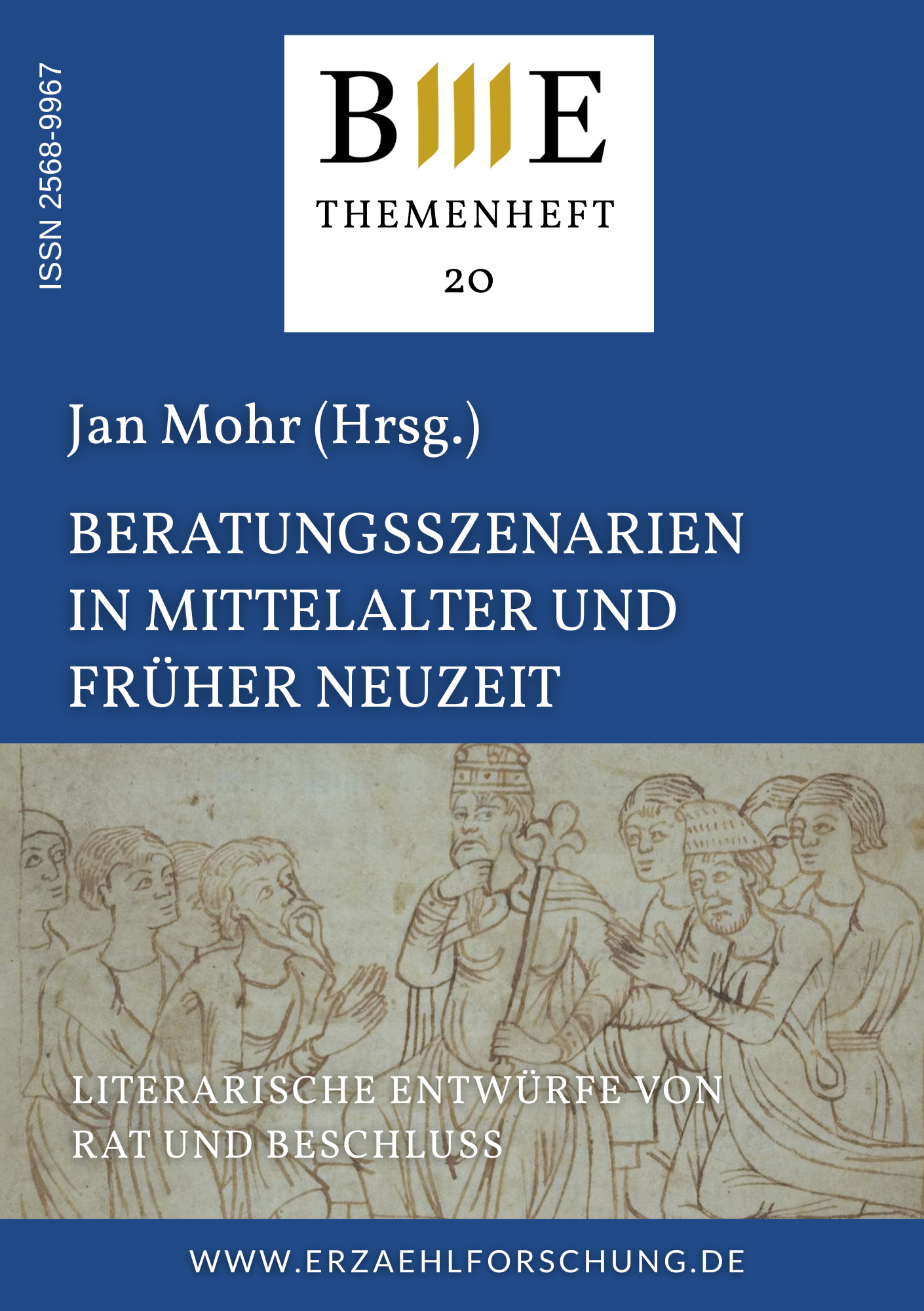
The functions and benefits of both public and private consultation have not only a practical dimension but also a social one. In the relatively loose social structures of pre-modern era, publicly visible counselling could foster consensus, and council meetings could integrate individuals into the collective and stabilise it. Accordingly, literary texts depict a wide variety of scenes of both formal and informal counselling, which, however, have so far attracted only sporadic attention in research.
The essays in this volume reconstruct historical conceptions of successful and failed advice as depicted in literary works. Adopting a comparative perspective, they combine close textual analysis with systematic reflections on the consolidation of political communities in the pre-modern era.
The current annual issue is continuously updated with new articles as soon as they have passed through the peer-review process and the editorial process. We notify registered readers of the publication of new articles by email. At the end of the year, the entire annual issue will also be available for download here as a single PDF file. Special issues are published throughout the year as standalone editions.
Cover image: Paris, BnF, Latin 1156B, fol. 176r (detail), Rennes, c. 1430 (source: gallica.bnf.fr / BnF)
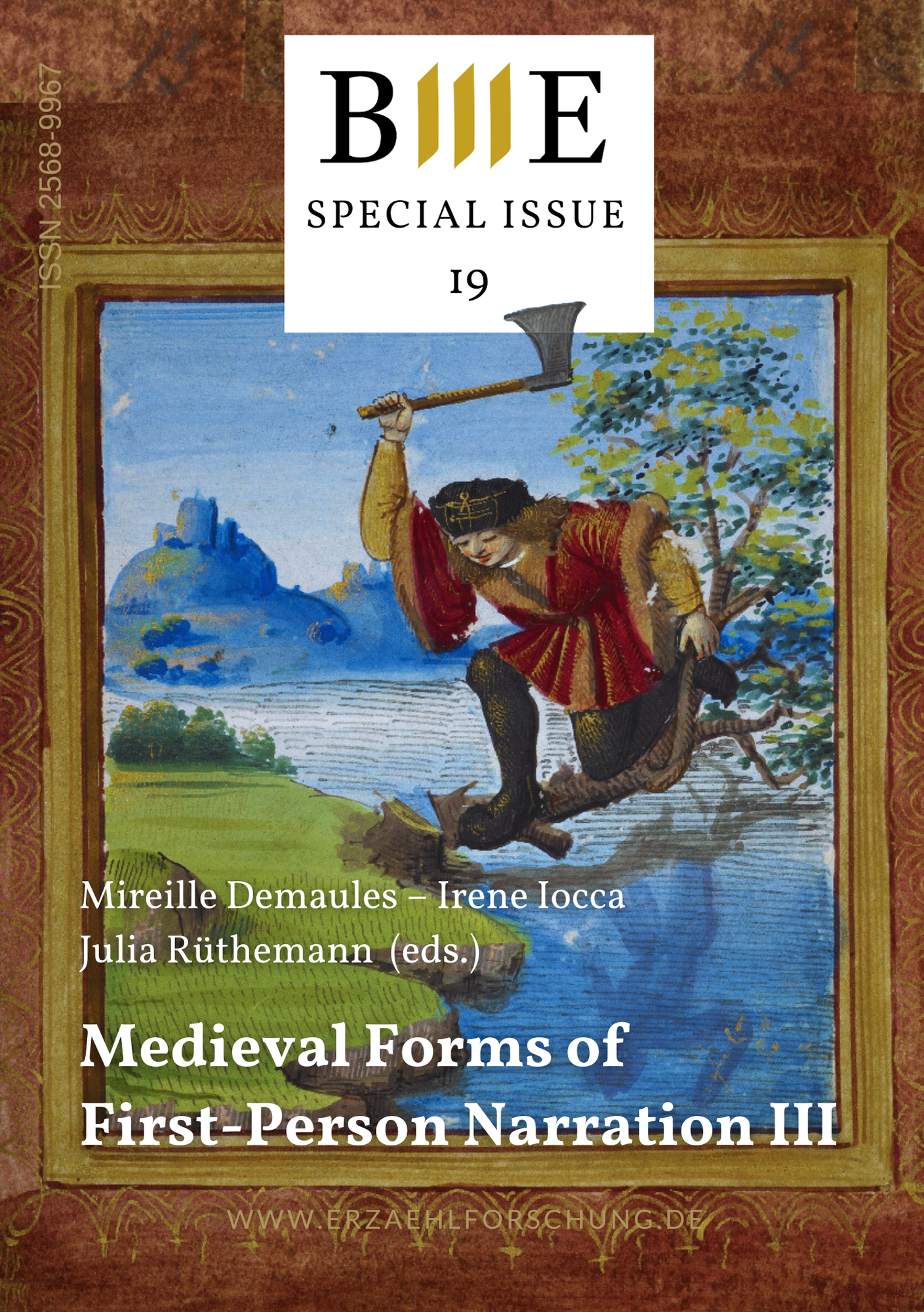
This multi-author volume takes as its subject medieval first-person poetic narratives, a literary format that came to prominence in the course of the later European Middle Ages (c. 1250-1500), quickly developing into an extensive text family. The papers published here were presented at a trilateral conference series held at the Villa Vigoni in Italy. This present volume takes up the questions explored during the third conference: How do medieval first-person narratives conceptualize authorship and put it into practice? What kind of authority do they invoke? How do they connect to that authority? What precisely are the processes of authorization involved? To be sure, such questions might be asked of texts in every format, but they are especially crucial to the analysis of first-person narratives because the ›I‹ is by definition implicated in the events narrated or, at the very least, in the narrated world where they unfold. This essential quality of first-person narratives prompts further questions: What is the narrator’s relation to the narrative and the text itself, its creation? What do the formal features of the texts tell us about the presence of an authorial ‘I’, how does he or she relate to the discursive content, and, perhaps most crucially, what purpose does the text itself come to serve?
Cover picture: Pierre Sala, Petit Livre d'Amour (also known as Emblesmes et Devises d'Amour), British Library, Stowe MS 955 (fol. 15r), ca. 1500, Parchment and paper, French/Italian, 130 x 95 mm. By permission of the British Library.
Die jeweils aktuelle Jahresausgabe wird permanent durch neue Beiträge ergänzt, sobald diese das Peer-Review-Verfahren und den Redaktionsprozess durchlaufen haben. Registrierte Leserinnen und Leser informieren wir über die Veröffentlichung neuer Beiträge per E-Mail. Zum Jahresende wird an dieser Stelle zusätzlich die gesamte Jahresausgabe in einer einzigen PDF-Datei zum Herunterladen zur Verfügung stehen. Themenhefte erscheinen während des Jahres als eigenständige Ausgaben.
Titelbild: Paris, BnF, Latin 1156B, fol. 163r (Ausschnitt), Rennes, ca. 1430 (Quelle: gallica.bnf.fr / BnF)
The special issue explores the diverse and creative ways in which narrative voice(s) curate the Old Norse sagas. In terms of narratology, saga literature is characterised by the presence of several narrative voices at different narrative levels. Because of the different qualities of the individual voices, ambiguities are created, suspense is evoked, and the narrative voices sometimes undermine each other's authority. The overall narrative is therefore only revealed through the interplay of the voices. To fully comprehend the narrative complexity of the sagas, it remains the task of the audience to engage with the narrative. The ways in which voices are used can be found across genres. Thus, there seems to be an implicit framework for the acceptability of narrative options in saga literature, which, however, leaves plenty of room and flexibility for creative storytelling.
Pre-modern short epics are based on fragments from a repertoire of mobile linguistic formulas and mental images: Motivic schemes, argumentative topoi, consensus-building proverbs and examples or performative speech acts and gestures appear as modular units, as variants of recognizable types at different times in different formats, in diverse traditions and discourse contexts. They form narrative and iconic structures that can be described as “temporal communities”.
The contributions in this volume make productive use of this open concept of textual “temporal communities” in order to trace the metamorphoses and journeys of such compact modules – such as magic spells and blessings, motifs, figurations and plot schemes – through time and formats.
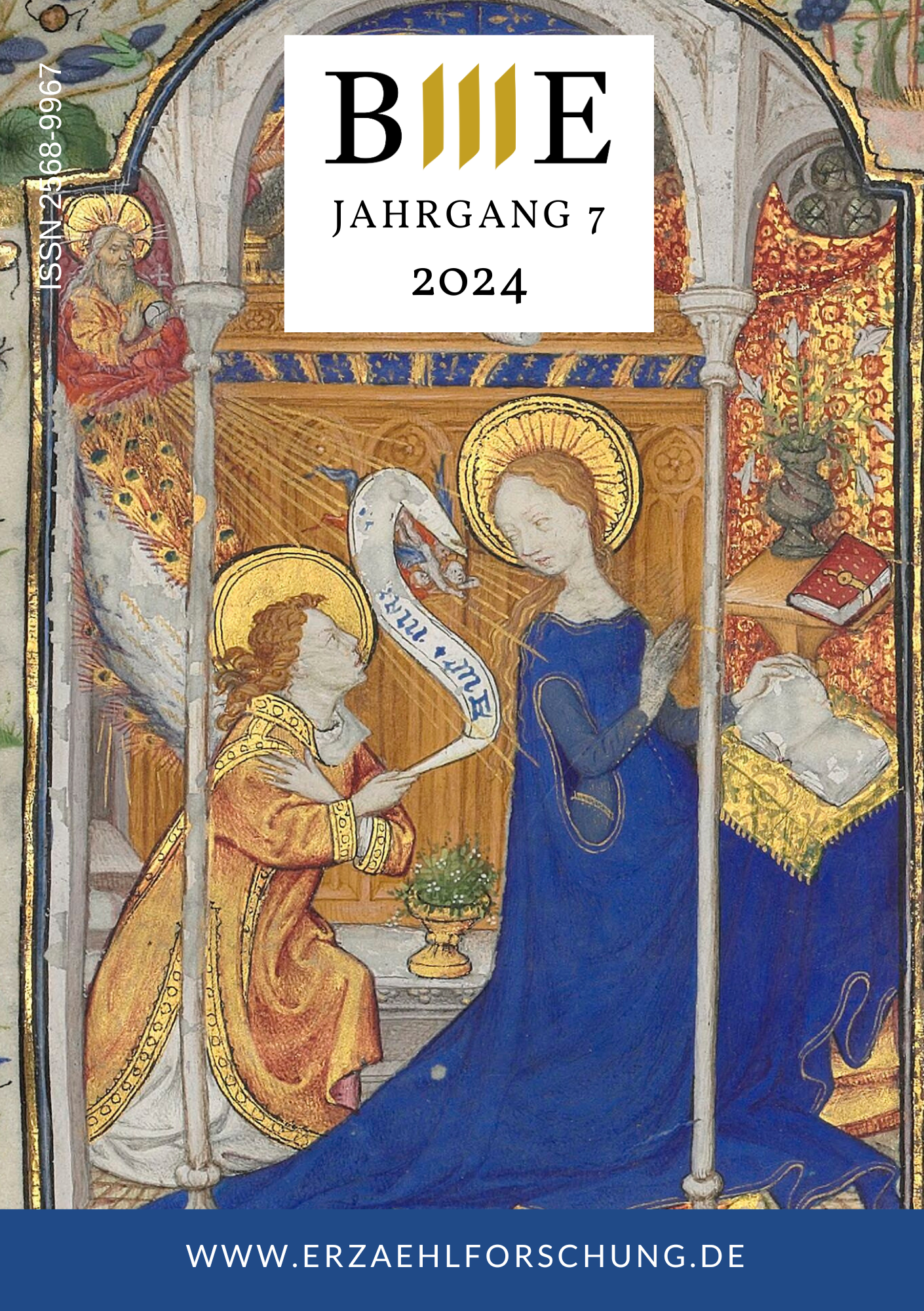
The current annual volume is continually supplemented with new articles as soon as they have gone through the peer review procedure and editing process. We inform registered readers about the publication of new contributions by email. At the end of the year, the complete annual volume is available for download as a single PDF file. Special issues are published throughout the year as independent publications.
Cover picture: Paris, BnF, Latin 1156B, fol. 31r (detail), Rennes, approx. 1430 (source: gallica.bnf.fr / BnF)
This anthology sheds light on conceptions, forms of representation and patterns of interpretation of the poetic ending in the field of medieval short stories. The end is a culturally extremely powerful strategy for creating meaning, signaling completion and defining the goal and result of what precedes it. Specifically in a historical perspective, the end appears as a polymorphic phenomenon, which cannot easily be defined. In pre-modern short stories, the question of how to define and delimit the end becomes particularly virulent. Here, the ending often proves to be fragile, as the end of the plot and the conclusion unfold opposing semantics. Using specific case studies, the articles in this anthology examine questions of whether and in what way the ending is able to create closure and how its potential to create order conflicts with forms of an open ending.
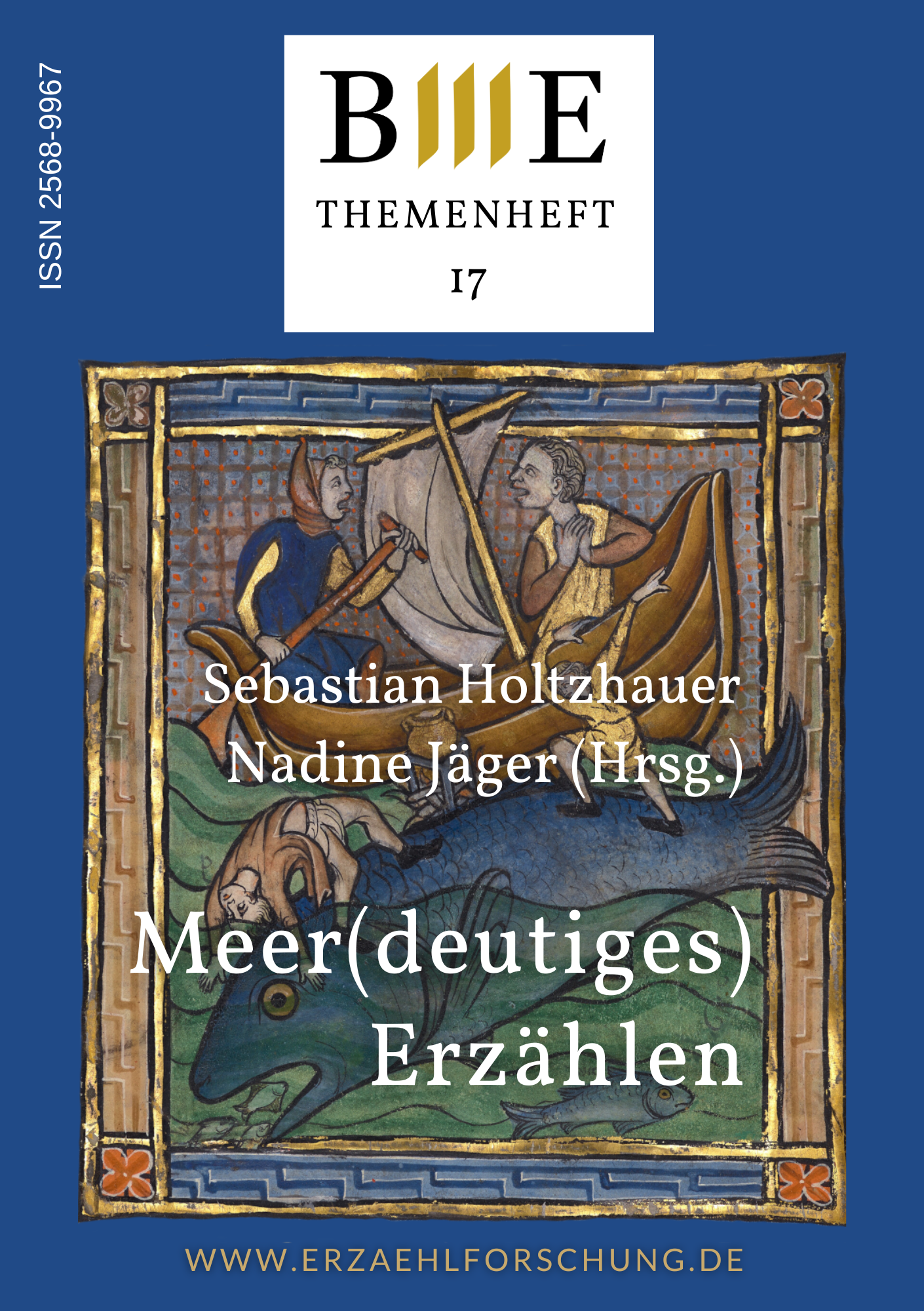
A multitude of pre-modern texts attest to intricate intertwinings of the maritime with the ambiguous: phenomena of ambiguity and ambivalence are outsourced to thalassic settings, with the maritime space being utilized as their projection surface. Starting from this guiding observation, the special issue opens up diverse perspectives on storytelling at the intersection of sea and ambiguity, by exploring how pre-modern texts exploit the varied potential meanings of the sea, juxtaposing and opposing them to unfold ambiguities narratively. The range of works discussed extends from Homeric epic, early Middle High German poetry and Romances of Antiquity to Arthurian Romance and heroic epics, fables, legends and pilgrim reports.
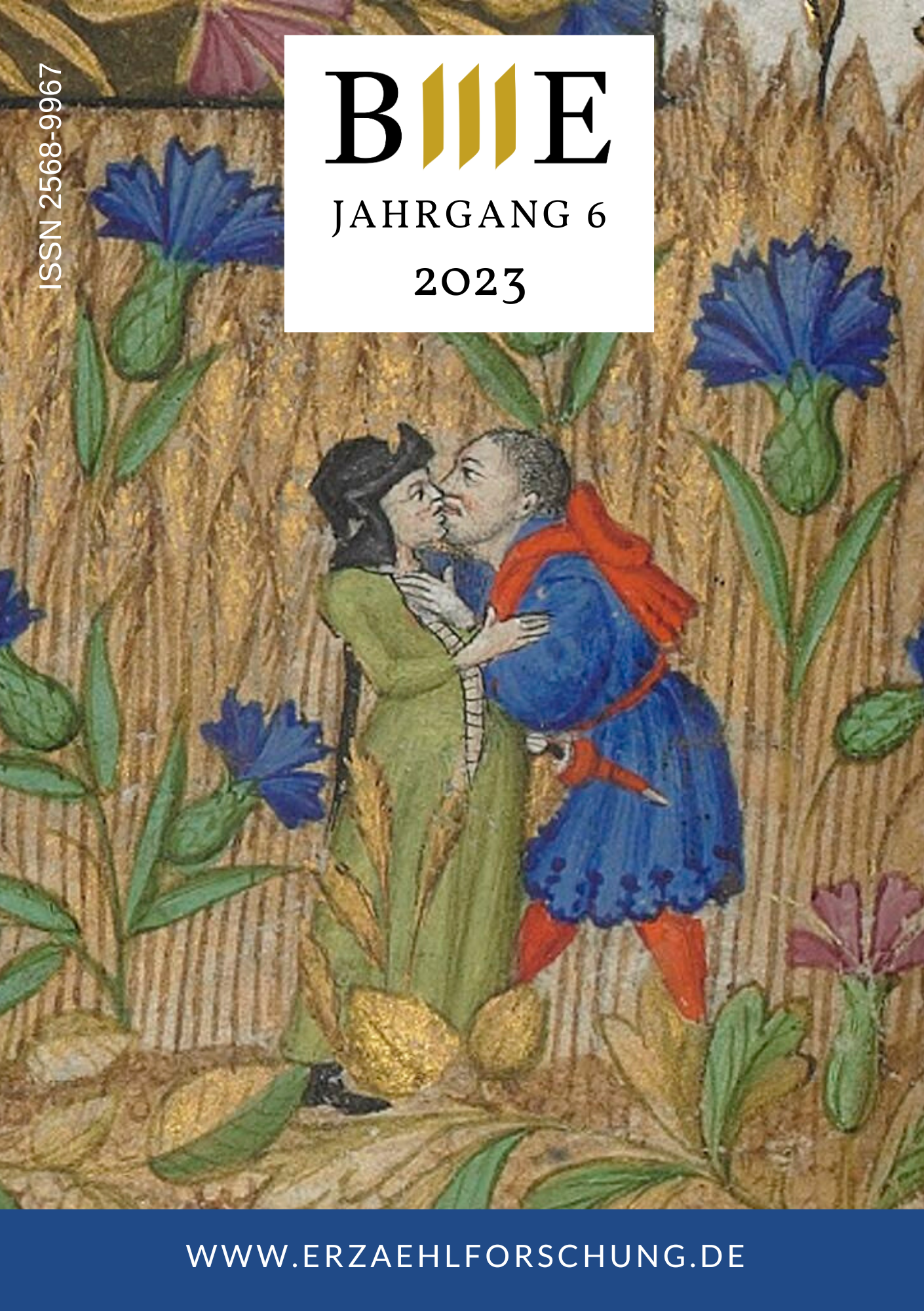
The current annual volume is continually supplemented with new articles as soon as they have gone through the peer review procedure and editing process. We inform registered readers about the publication of new contributions by email. At the end of the year, the complete annual volume is available for download as a single PDF file. Special issues are published throughout the year as independent publications.
Cover picture: Paris, BnF, Latin 1156B, fol. 161v (detail), Rennes, approx. 1430 (source: gallica.bnf.fr / BnF)
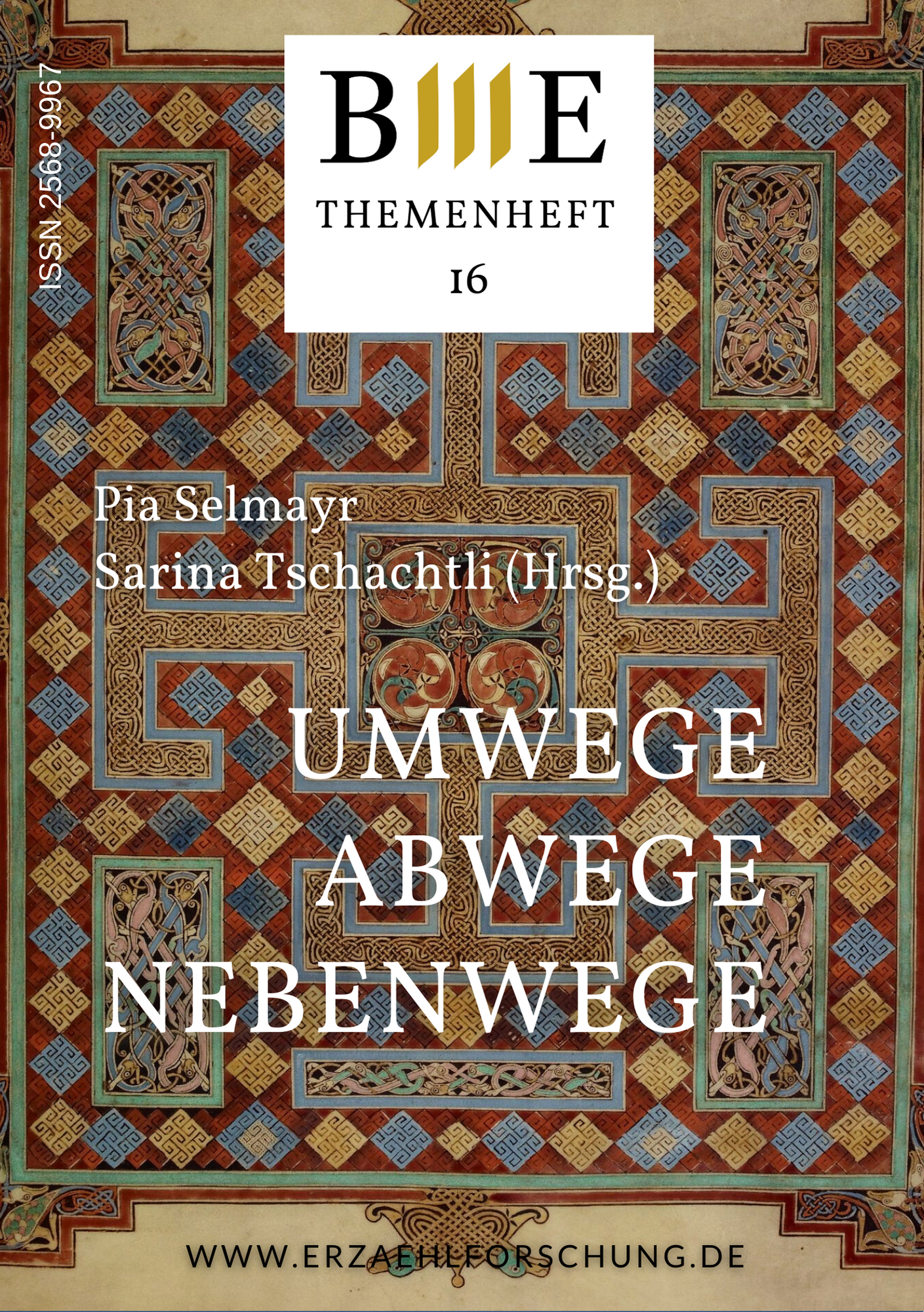
Medieval narrative texts are characterised by the paths taken by their characters. These paths are closely linked to the characters' experiences and perceptions and determine the narrative space and the structure of the text. Through the mobility of the characters, spatial and subject boundaries are crossed, knowledge and experience are expanded and ideas of self and other, of proximity and distance, of centre and periphery are negotiated. It is rarely the straight, purposeful paths, but above all the detours, side paths and byways that lend themselves particularly to narrative development and symbolic charging. The contributions in this anthology illustrate this narrative multivalence of narrated paths and also locate the texts analysed in the transcultural narrative of pre-modern literature.
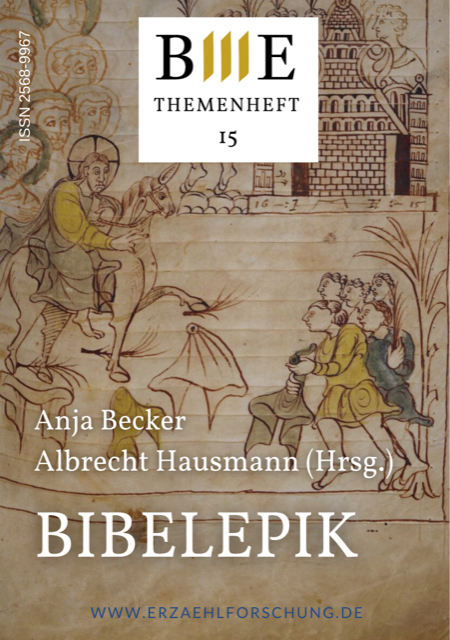
Biblical epic is a European narrative tradition that was of central importance in late antiquity and the Middle Ages. The contributions in this special issue from Byzantine Studies, Classical Philology, Early German Literary Studies, Romance Studies, Dutch Studies and Yiddish Literary Studies open up interdisciplinary perspectives on this hitherto under-researched subject. Latin and vernacular biblical epics are not only based on the Bible and apocryphal and legendary pretexts, but also integrate narrative forms and literary registers from ancient epic, medieval heroic epic, the courtly novel, chronicles, didactic poetry, lyric poetry and spiritual drama. This constitutive hybridity makes the genre, according to the central thesis, a particularly productive subject for (narratological) investigations into pre-modern narrative and reception methods.
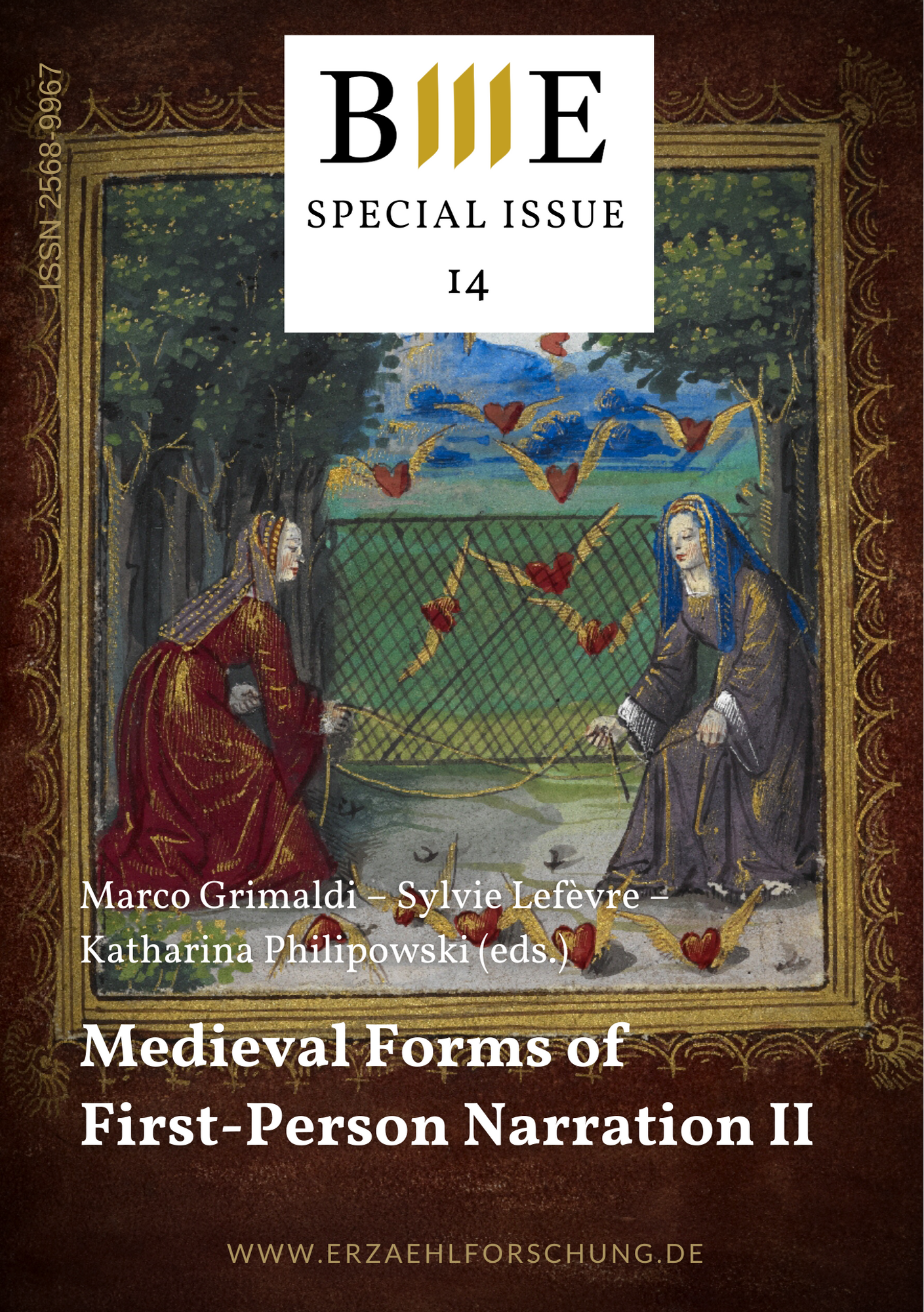
One of the central features that medieval narratives in the first person have in common is their specific structure. Most of them are not continuously and coherently narrative, but in most cases include long discursive sections or textual elements such as letters, prayers, songs, or dialogues. The classification of these texts as narrative literature is thus anything but self-evident. The contributions to this volume examine how first-person discursivity and narrativity interact in French, German, and Italian narratives, what interrelation exists between the first-person narrative stance and discursivity, and how the literary forms of narrativity and discursivity (each of which is assigned a specific tense, namely the past tense and the present tense) relate to each other.
Cover picture: Pierre Sala, Petit Livre d'Amour (also known as Emblesmes et Devises d'Amour), British Library, Stowe MS 955 (fol. 13r), ca. 1500, Parchment and paper, French/Italian, 130 x 95 mm. By permission of the British Library.
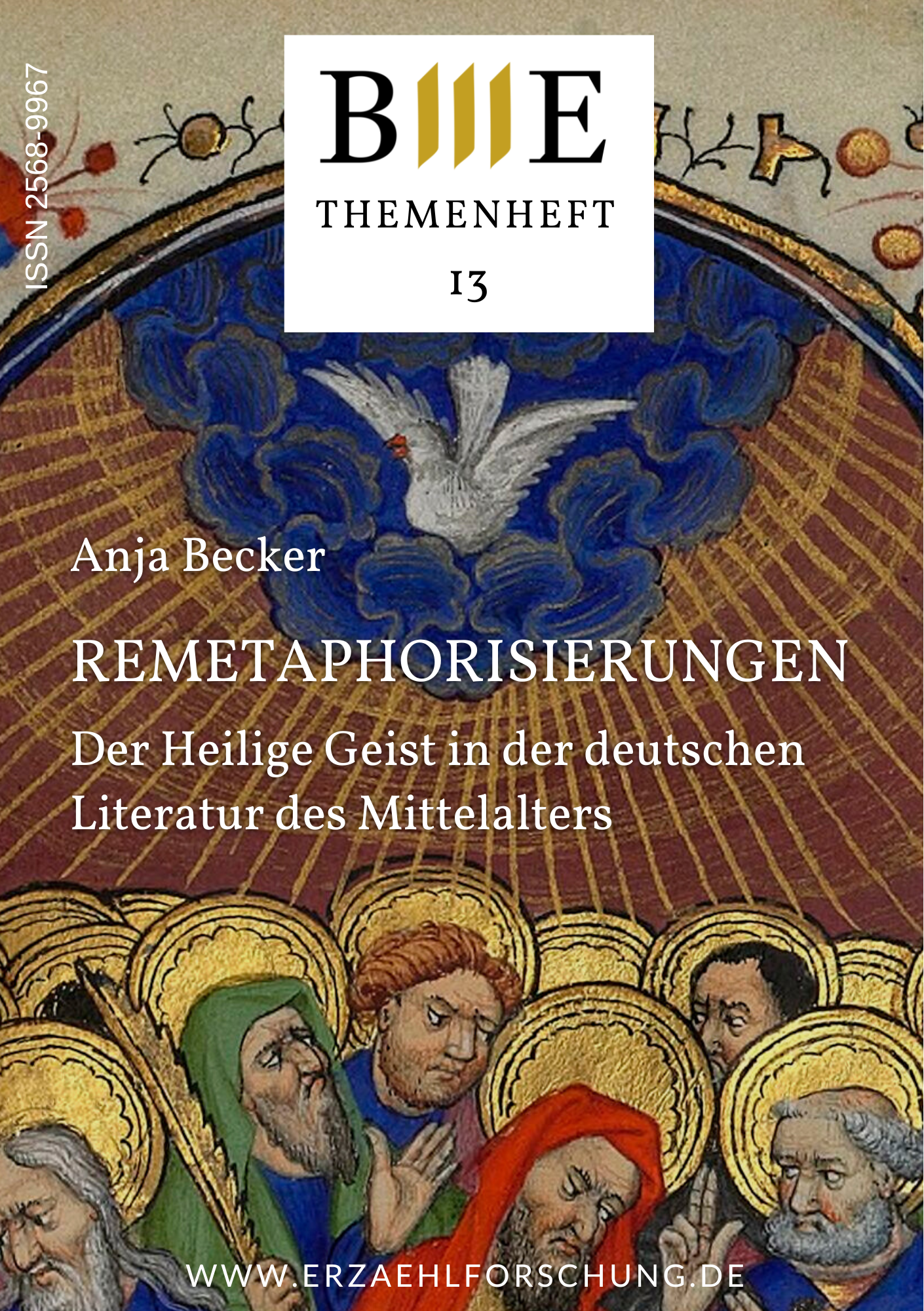
This monograph is the first to present and analyse the German Holy Spirit literature from the start of the tradition to the beginning of the 16th century in a cross-genre form (biblical epic narratives, treatise/sermons, songs/prayers) and with the help of recent metaphor theories. The (literary) discourse on and about the Holy Spirit is based on a manageable core of cognitive metaphors, which are reused, ›remetaphorised‹, in a variety of ways in concrete linguistic and rhetorical acts, whereby creative semantic and performative effects can be achieved that resonate with the lifeworld of the recipients. ›Remetaphorisierung‹ is also a central production-aesthetic process of pre-modern spiritual literature, which is closely linked to other text production processes (as ›remetaphorising retelling‹ in narrative texts, as ›remetaphorising allegorising‹ in appellative texts and as ›remetaphorising translation‹ of invocative texts).

The thematic issue contains the bulk of the contributions to the international digital conference 'Digitale Mediävistik. Perspektiven der Digital Humanities für die Altgermanistik' (9-11 February 2022), partly expanded and supplemented by discussion reports. In six sections on the digitisation of manuscripts and early prints, OCR; digital editions; digital infrastructure and research data management; repositories and databases; online publishing and digital scholarly communication; stylometry and text analysis, the central question of the application perspectives of the digital humanities in German medieval studies are addressed. The volume documents examples of what has been achieved in the discipline through the digital humanities - powerful text processing tools, model projects for digital editions, useful research infrastructures, repositories and databases that can be used in many ways and are increasingly networked, new methods of quantitative text analysis - and identifies desiderata and future perspectives.
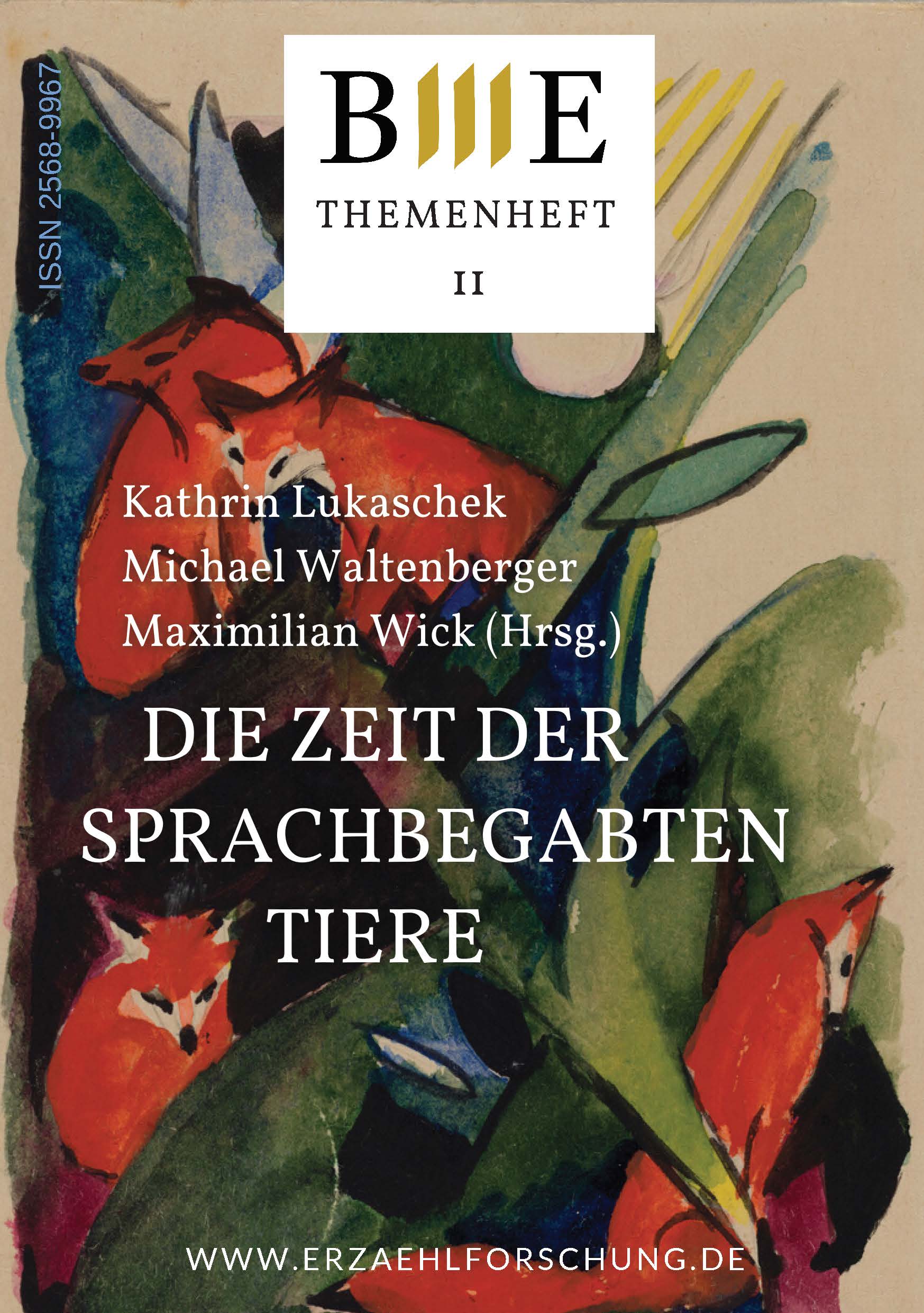
The fabulous animals' gift for language was understood as an indication of a fictional narrative that allows human relationships to be recognised in a timeless way in the mirror of unchanging animal nature. However, the speech, thoughts and actions of the characters in the pre-modern animal epic are by no means to be neatly separated from the merely inauthentic symbolic function of their mute, unreasonable animality in the sense of a poetic a priori, but are designed to unsettle man's trust in his own rationality and power to act. This uncertainty becomes productive in the range of forms of the genre as well as in individual texts: the expectation of the normative immutability of nature develops into the counterpoint of drafts of order with open temporality; scenarios of indeterminable intentionality, historical changeability and crisis-ridden alternativity emerge.
The current annual volume is continually supplemented with new articles as soon as they have gone through the peer review procedure and editing process. We inform registered readers about the publication of new contributions by email. At the end of the year, the complete annual volume is available for download as a single PDF file. Special issues are published throughout the year as independent publications.
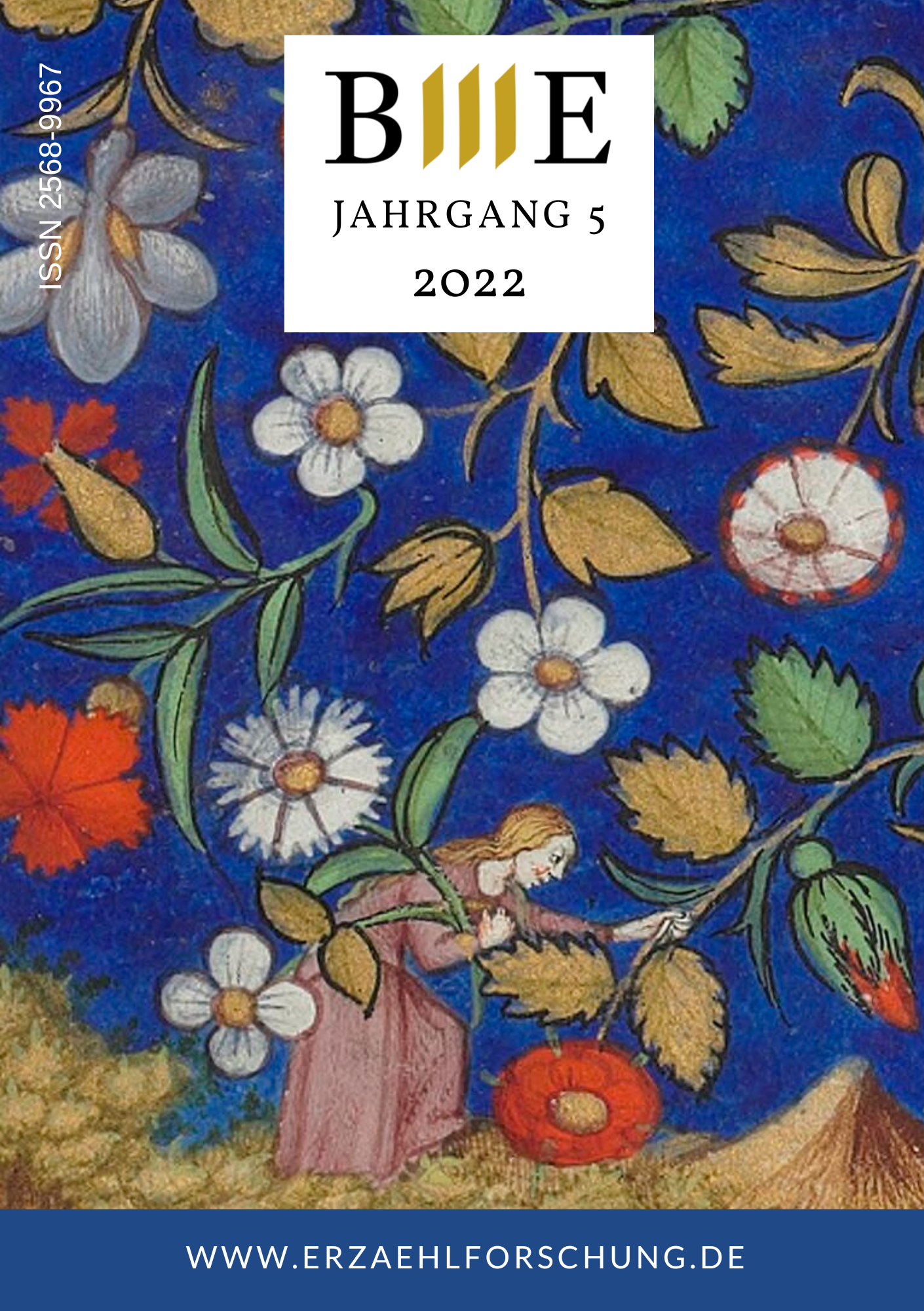
Cover picture: Paris, BnF, Latin 1156B, fol. 146r (detail), Rennes, approx. 1430 (source: gallica.bnf.fr / BnF)
The abstract transgression of boundaries as a structural moment of pre-modern short fiction in particular is sometimes concretized in bad weather. The one liminal twist that often determines small-scale epic storytelling also manifests itself in the change of weather, which for the pre-modern era is fundamentally more than an arbitrary, chaotic natural phenomenon: weather – ›beautiful‹ weather, but above all ›bad‹ weather – is fundamentally a medium of communication between transcendence and immanence, between God and creation. In this context, weather is not only an ontological transgression per se, but – especially in the form of ›bad‹ weather - often goes hand in hand with existential transgressions on a creaturely level.
The contributions in this volume shed light on the connection between small epic narratives and transgressions of boundaries, particularly in the area of weather.
The current annual volume is continually supplemented with new articles as soon as they have gone through the peer review procedure and editing process. We inform registered readers about the publication of new contributions by email. At the end of the year, the complete annual volume is available for download as a single PDF file. Special issues are published throughout the year as independent publications.
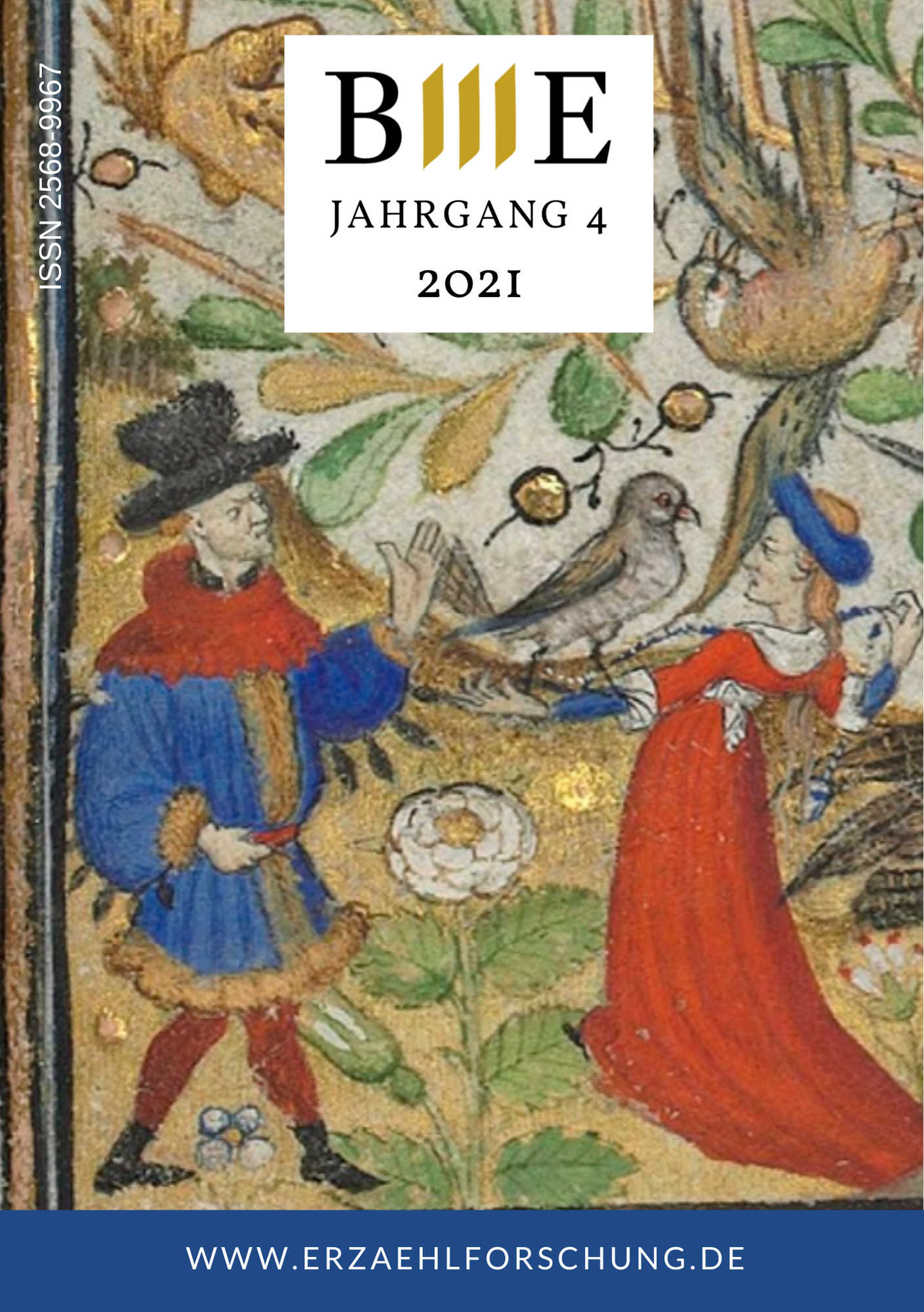
Cover picture: Paris, BnF, Latin 1156B, fol. 15r, Rennes, 1430 (source: gallica.bnf.fr / BnF)
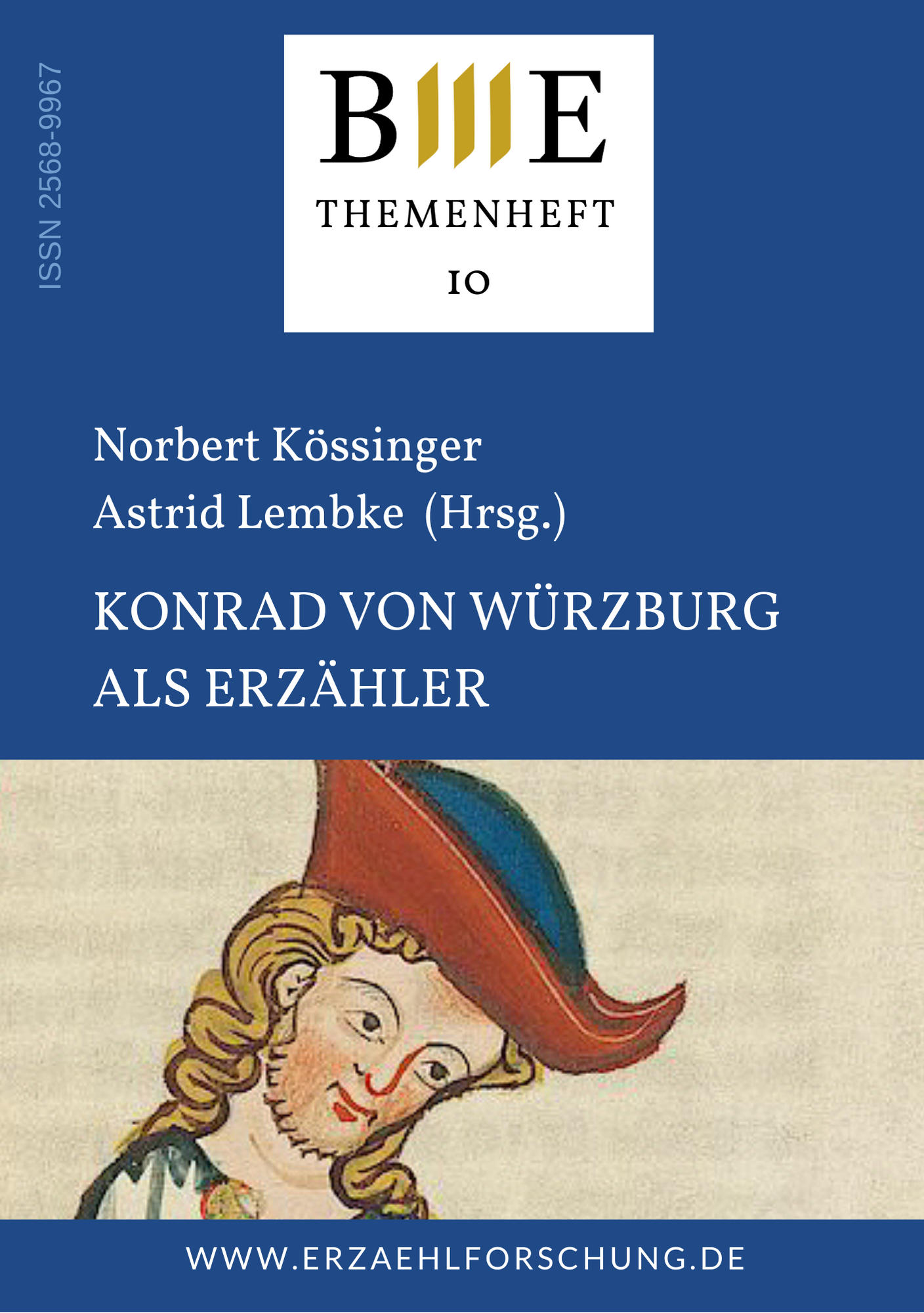
Konrad of Würzburg was active in many different literary genres like no other German-speaking author of the 13th century. This special issue is the first to systematically examine Konrad's profile as a narrator and looks at his oeuvre from the perspective of recent narratological studies and findings. This includes the much-discussed problems surrounding the possibilities of distinguishing between author and narrator or between fictionality and factuality, as well as the fundamental question of what constitutes narrative in general and specifically in the European Middle Ages. With their case studies on the work of Konrad of Würzburg, the articles in this special issue aim to offer ideas and impulses for further discussion.
The special issue is located at the intersection of three discourses of medieval narrative research by examining the interdependencies of ›time’, ›frame’ and ›transgression‹. Among other things, it looks at frictions between competing models of narrated time as well as short circuits between narrative time and narrated time, each of which is capable of transgressing previously established framings. The contributions are devoted to a hitherto little-noticed metalepsis of ›Erec‹, the relationship between time and transcendence in the Kyot digression of ›Parzival‹, the transgressiveness of the bull miracle in Konrad of Würzburg's ›Silvester‹, the narrativisation of time (dislocation) in the Brandantradition and in ›Mönch Felix‹, the drinking and counselling rituals of the Spielmannsepik as well as forms and functions of anachronistic narration in the ›Scotichronicon‹. Taken together, they emphasise not only the diversity of approaches, but in particular the cross-textual and cross-genre relevance of ›time-frame-transgressions‹ in pre-modern narrative.
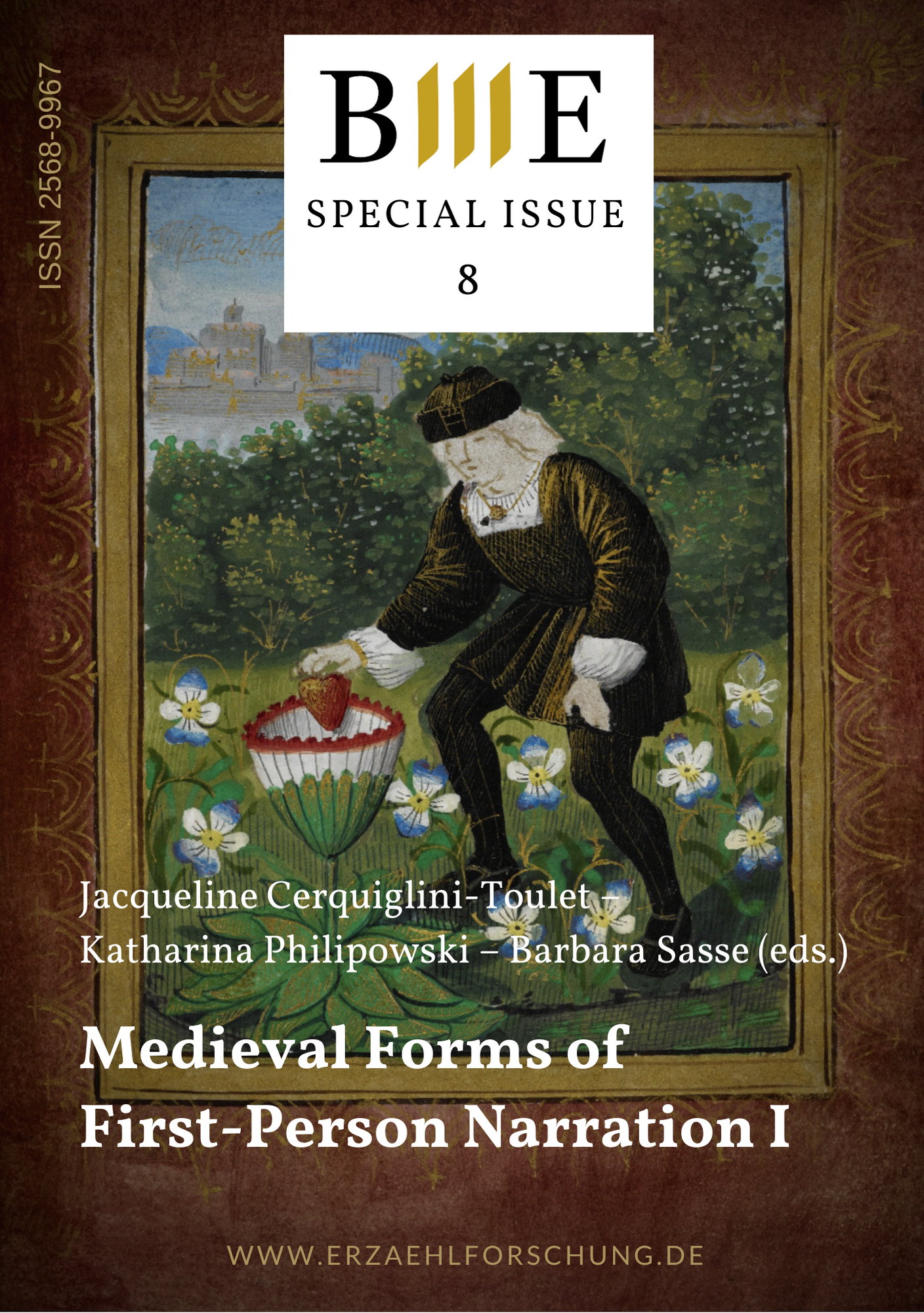
In many European vernacular literatures in the 13th and 16th centuries, texts with remarkable congruities clearly emerge. They are allegorical, their subject is worldly love, and they use the first person as their narrative form. The most popular would be the French ›Roman de la Rose‹, the Italian ›Vita Nuova‹ by Dante or the Spanish ›Libro de buen amor‹. German examples are the ›Minnelehre‹ by Johann of Constance or the anonymous ›Minneburg‹. Until now such texts have been classified as (Dream-) allegories, as courtly love (Minne) speeches, or also as (fictional or stylized) autobiographies. As a result, they have rarely, if ever, been compared with each other. The goal of our conferences is to facilitate interdisciplinary exchanges regarding these texts, especially as concerns poetological, narrative, and allegorical dimensions.
Cover picture: Pierre Sala, Petit Livre d'Amour (also known as Emblesmes et Devises d'Amour), British Library, Stowe MS 955 (fol. 6r), ca. 1500, Parchment and paper, French/Italian, 130 x 95 mm. By permission of the British Library.
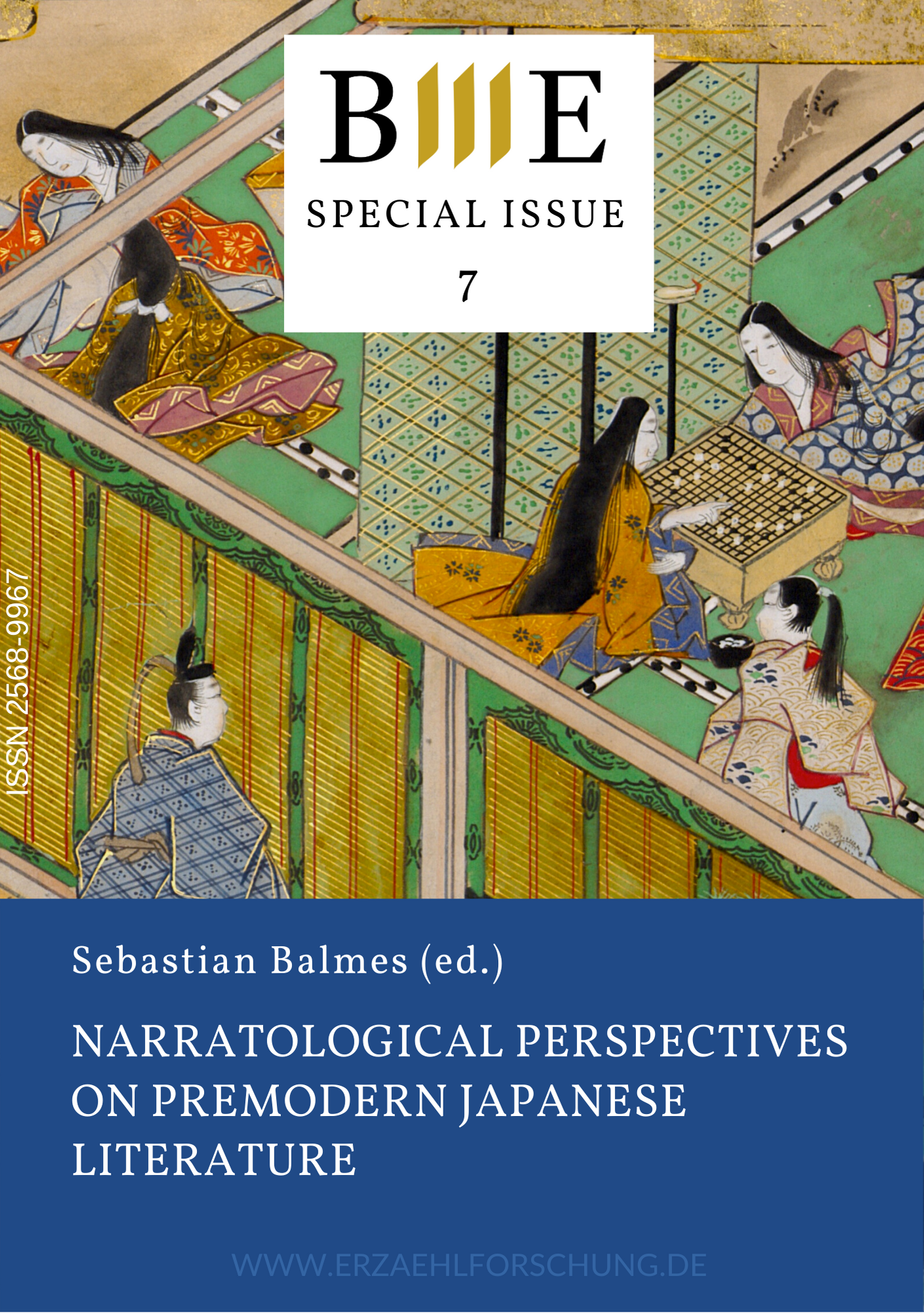
This special issue comprises eight studies that deal with Japanese narratives from the tenth to the fifteenth century, including theater and painting, from a narratological point of view, revolving around discourse, character, and time. While narratology provides useful tools for analysis, some theories need to be revised in order to apply to Japanese texts. The papers in this volume contain several such proposals, but their focus lies first and foremost on examining characteristics of premodern Japanese narrative, which—compared to Western (medieval) literature—stands out through its elusive qualities. The special issue is equally aimed at an audience with a background in Japanese Studies and at scholars who take an interest in diachronic and intercultural narratology.
Painting used on the cover taken from: ‘Genji kokagami’ (17th c.), vol. 1, Munich, Bayerische Staatsbibliothek, Cod.jap. 14(1, fol. 17v. For further details on the scene depicted, see the contribution by Midorikawa Machiko in this volume.
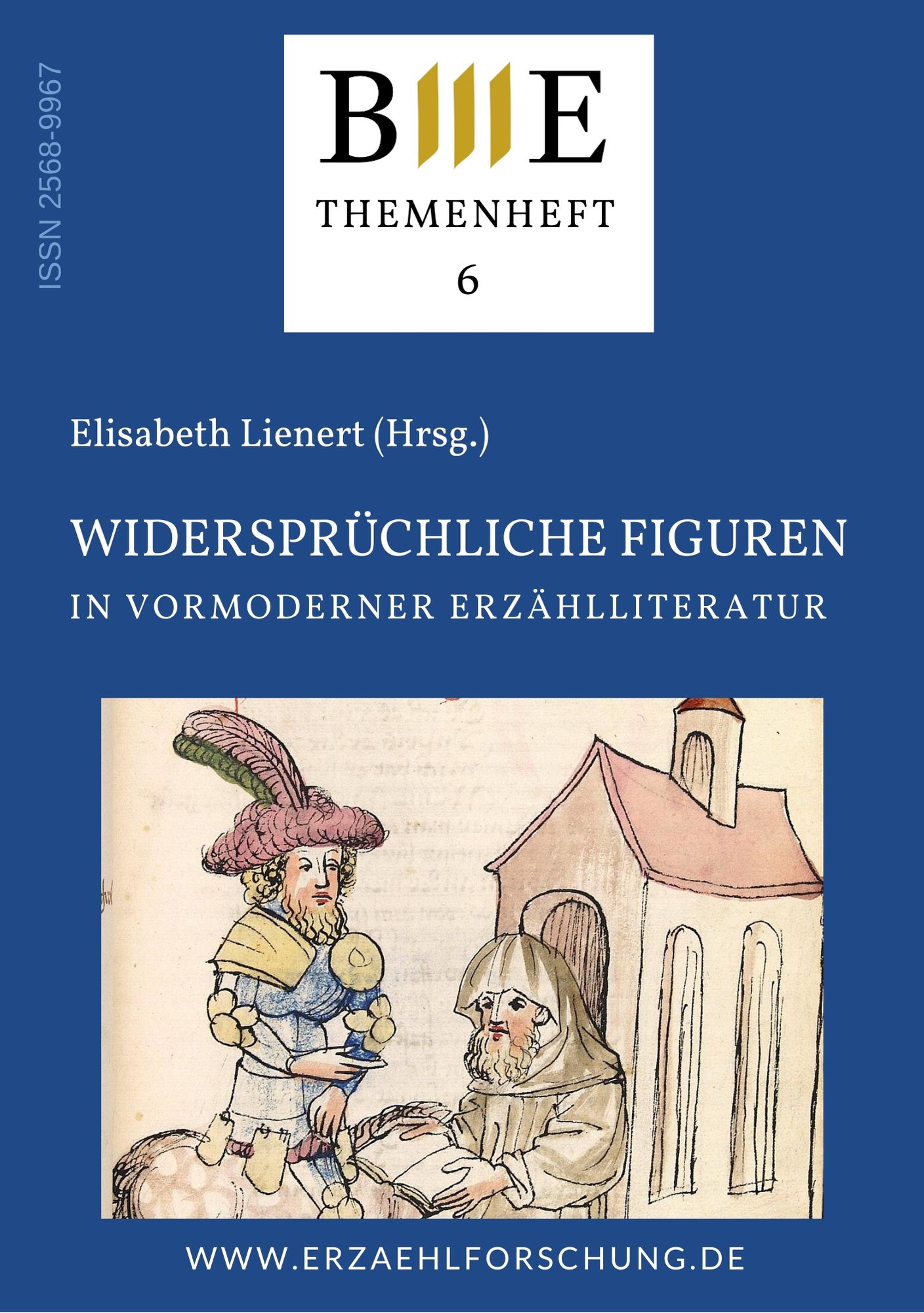
Contradictory characters are characters whose internal characterisation in the text is contradictory or who are designed in and as a contradiction to discourses and traditions external to the text. The volume contains case studies from Virgil to the early New High German prose novel and the modern reception of the Nibelungen, combined with methodological considerations in the field of tension between character narratology, dialogue research, historical anthropology and discourse analysis. The peculiarities of medieval-early modern narrative (above all the trans-textuality of many characters and their connection to plot or script) become just as clear as the need to reflect on epochal clichés. The contributions invite us to think further about contradiction as a character-narratological category.
›Beiträge zur mediävistischen Erzählforschung‹ (BmE) are published online by the University of Oldenburg Press under the Creative Commons License CC BY-NC-ND 4.0. The contributions published here may therefore be disseminated and published for non-commercial purposes, without modification, stating the author and place of publication.
Editors: Prof. Dr. Anja Becker (Bremen) and Prof. Dr. Albrecht Hausmann (Oldenburg)
Contact: herausgeber@erzaehlforschung.de - Internet: www.erzaehlforschung.de
ISSN 2568-9967